
Hi First name / Sweet Reader, ,
Quick question: do you get hungry every couple of hours, crash in the afternoon, and crave something sweet by 3pm, even when you're eating pretty well?
If that's you, I want to take the guilt off your shoulders today. That's not a willpower problem, it's a fuel problem.
Your body has two fuel tanks. One runs on sugar. One runs on fat.
And most of us have been living out of the wrong one for years.
Today - you can find out which one of these describes you. AND, how to change out the fuel tank when needed.
HEALTH & NUTRITION TIP OF THE WEEK 🌿
TAKE THE QUIZ TO FIND OUT WHICH FUEL TANK YOU USE.
Answer yes or no to the following questions.
Signs you might be a sugar burner:
- Do you get "hangry," shaky, irritable, or foggy when a meal is late?
- Do you crave sugar or carbs, especially in the afternoon and after dinner?
- Does your energy crash a couple hours after eating?
- Do you feel like you have to snack to keep going?
- Do you carry weight around your middle even though you eat pretty well?
Answered YES to TWO OR MORE of these questions? You're mostly a sugar burner.
Your body will not lose weight despite all your hard work - when your sugar fuel tank is the one running the show.
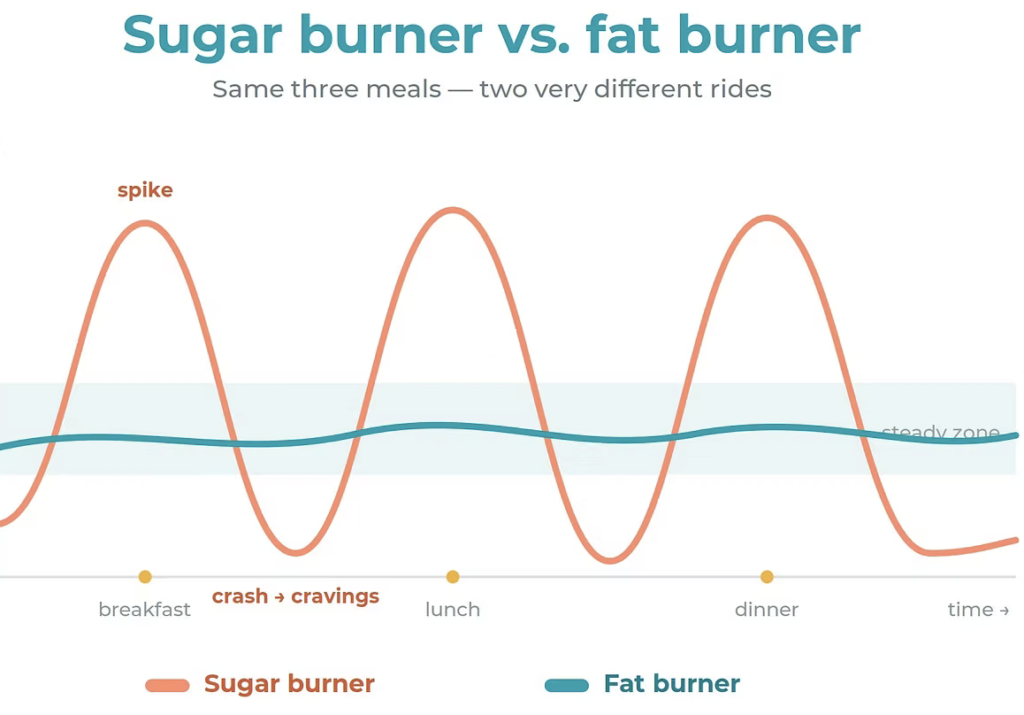
A sugar burner relies heavily on glucose from food for energy.
You eat → blood sugar rises → insulin responds → a few hours later you’re hungry again. If you’re constantly eating or grazing, your body has fewer opportunities to tap into stored fat.
A fat burner can switch fuels. When food is available, it uses it. When it isn’t, it can tap into stored energy.
That’s called metabolic flexibility - and you can help train it:
👉 Walk 10–15 minutes after meals to help your muscles use glucose.
👉 Build meals around protein, fiber + healthy fats for steadier energy and fewer cravings.
👉 Stop grazing. Give your body real breaks between meals.
👉 Close the kitchen after dinner. An overnight fasting window gives your body more time to use stored energy.
No cleanse. No extreme fasting. No restrictive diet.
The goal isn't to avoid carbs or sugar. It's to teach your body to use BOTH fuel tanks.
RECIPE OF THE WEEK 🍽️ 🚫 🍫
GRAB A GUIDE TO KICKING THE SUGAR HABIT


🌟 PEPTIDE CORNER🌟
Why BPC-157 and TB-500 Are in My Recovery Toolbox
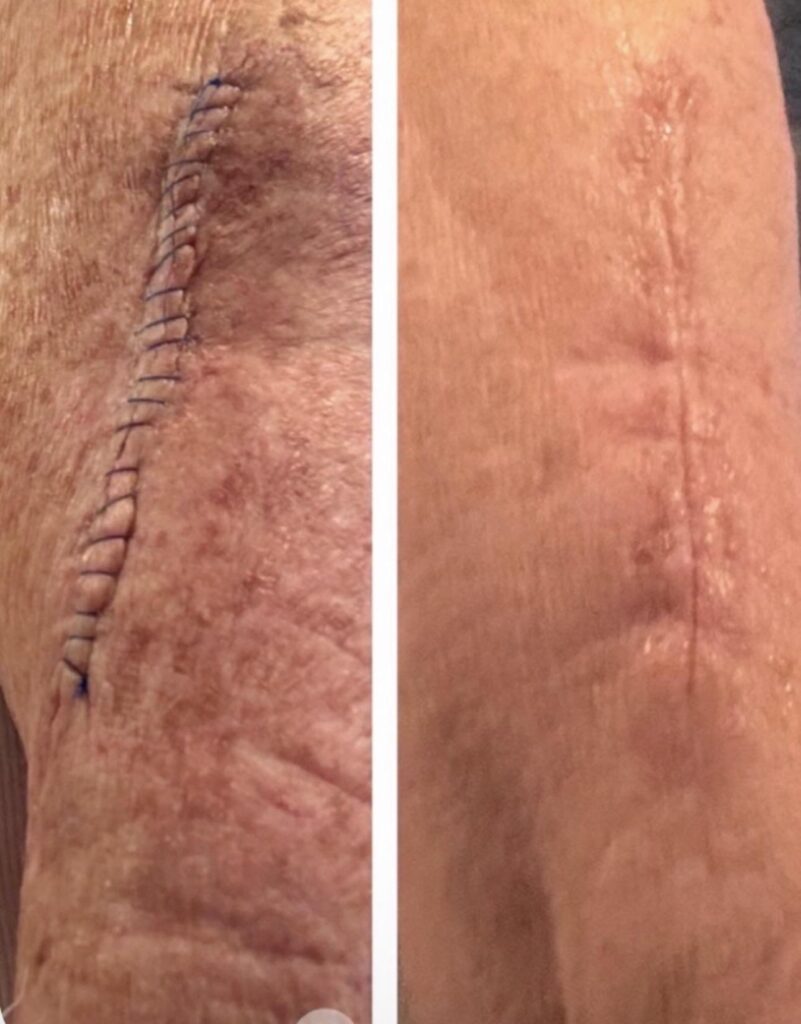
** graphic skin cancer pic below. Skim over if needed
Two or three times a year, I have stage 0, non-invasive skin cancers removed.
Even though these procedures are necessary, they still leave my body with a job to do: repair the surgical site and rebuild the tissue along the scar line.
That’s one reason BPC-157 and TB-500 are part of my personal recovery plan.
BPC-157 is a synthetic peptide modeled after part of a protective protein found in the stomach. Early research - mostly in animals - suggests it may influence growth factors and pathways involved in tissue, tendon and gut repair.
TB-500 is often paired with BPC-157. It is being studied for its possible role in cell “migration” (or getting health cells put in place); inflammatory signaling and connective-tissue repair.
I think of them as recovery-support peptides, not miracle drugs.
They do not remove my skin cancer.
They do not replace proper wound care.
I still follow my medical doctor’s instructions, care for the incision and take medication if it is prescribed.
My goal is simply to give my body additional support, faster healing time, as it repairs the surgical site.
Regenerative-medicine practitioner Jason Pencek, DC, FNP, frequently discusses BPC-157 for recovery support. This peptide duo is the one he uses the most with his patients.
Peptides aren’t magic. They may support tissue repair, gut health, metabolic health and recovery when used appropriately.
💗 But they never replace the foundations: protein, strength training, sleep, labs and a real medical plan.
Build the foundation first. Then consider the right tool for the problem you’re trying to solve.
Curious? Wondering about this peptide?
Here's the verified + certified medical site; best in class, that I vetted for peptides I feel GOOD about using!
BONUS: take a quiz to get a little insight on a peptide personalized for you.